Discover Cacao
Cacao vs Coffee: A Better Daily Energy?
Two drinks, two completely different compositions. Here we compare them factually.
- No sharp caffeine spikes
- Long-lasting, balanced energy
- Naturally rich in minerals
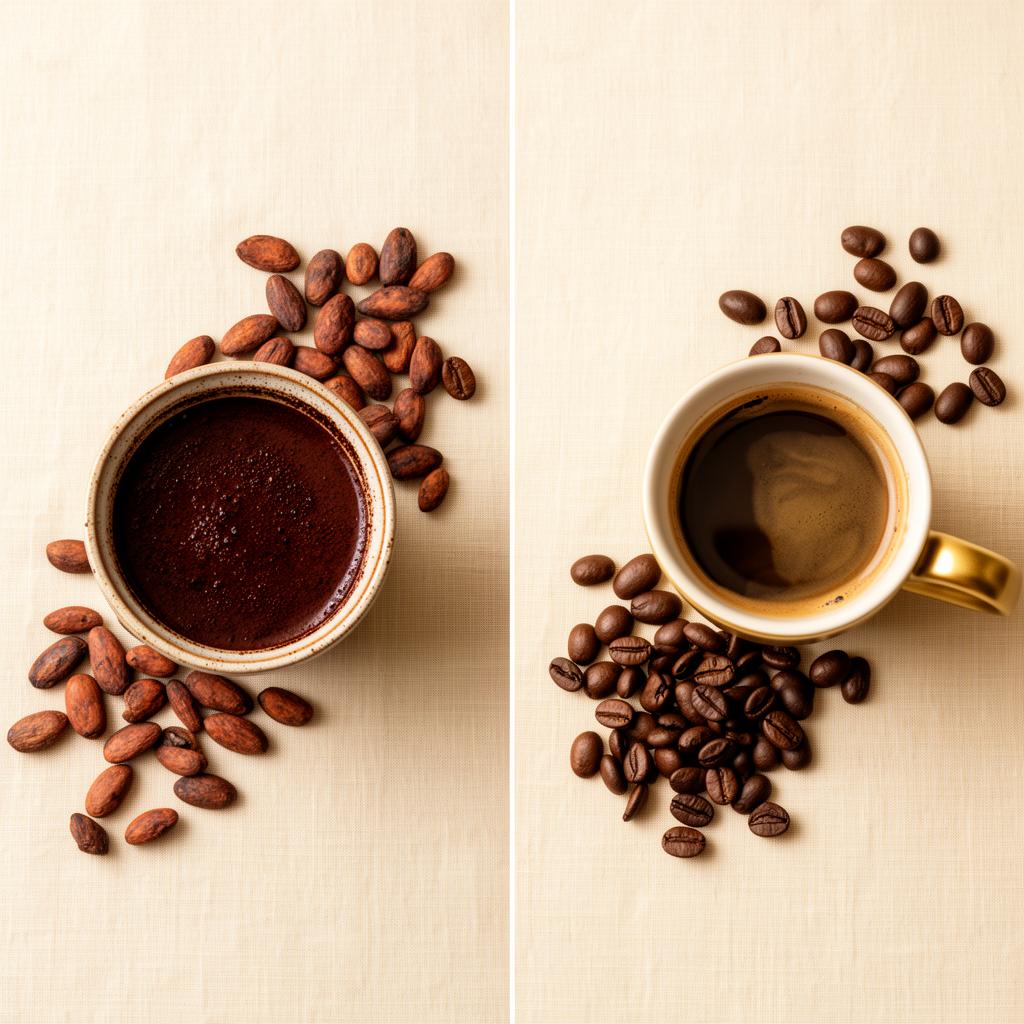
For millions of people, coffee is the default start to the day — a ritual deeply embedded in modern life. But alongside its popularity, many also report restlessness, energy dips, and disrupted sleep.
But how does the drink in the cup actually differ? That's where 100% pure cacao enters the conversation.
The Everyday Coffee Habit
Coffee delivers fast stimulation — a sharp spike of alertness driven by caffeine. For many, it's a non-negotiable part of the morning. But that speed comes with trade-offs: the energy is borrowed, not sustained, and the body often pays the price later in the day. Many are now looking for a natural coffee alternative.
- Increased heart rate (for some)
- Anxiety or restlessness
- Energy dips
- Sleep disruption
"Coffee works fast — but not always smoothly."
Why millions are switching from coffee to cacao
Coffee has been the world's favourite morning ritual for centuries. But a growing number of health-conscious people are discovering what the Aztecs and Mayans knew thousands of years ago: pure cacao is nature's most complete functional drink.
Unlike coffee, where caffeine accounts for most of the effect, cacao contains both caffeine and theobromine — with significantly less caffeine per cup. How this is experienced varies from person to person.
Coffee → Caffeine
- Fast-acting stimulant
- Sharp alertness
- Short duration
Cacao → Theobromine
- Gentle stimulation
- Longer-lasting
- Smooth energy curve
Cacao contains caffeine — but typically 4–6× less than coffee, resulting in a more balanced experience.
How the experience compares
| Experience | ☕ Coffee | ☕ 100% Cacao |
|---|---|---|
| Caffeine per cup | Higher | Lower |
| Theobromine | Negligible | Naturally occurring |
| Nutrient content | Minimal | Fat, fibre and minerals |
| Serving | Brewed drink | 100% cacao mass |
| Taste profile | Roasted, acidic | Full-bodied, bittersweet |
Caffeine per cup
Coffee
Higher
Cacao
Lower
Theobromine
Coffee
Negligible
Cacao
Naturally occurring
Nutrient content
Coffee
Minimal
Cacao
Fat, fibre and minerals
Serving
Coffee
Brewed drink
Cacao
100% cacao mass
Taste profile
Coffee
Roasted, acidic
Cacao
Full-bodied, bittersweet
Coffee
- Jitters
- Nervousness
- Energy swings
- Sleep sensitivity
Cacao
- Lower caffeine content
- Also contains theobromine
- Fat and fibre remain intact
Individual responses may vary.
More than energy. A different kind of fuel.
Same serving size. Completely different nutritional impact.
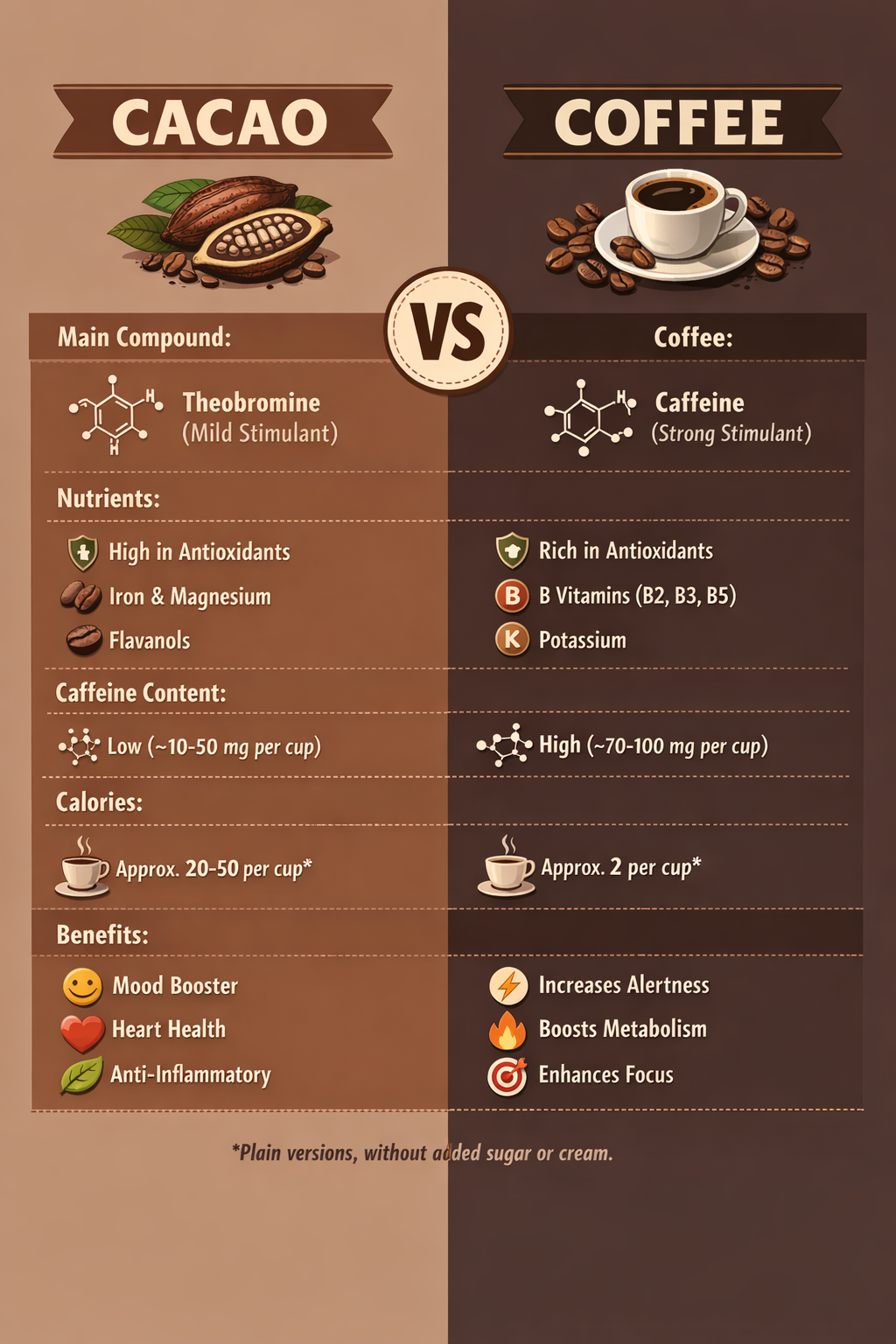
What's actually in your cup?
Coffee
15g
- ~2 kcal
- ~7 mg magnesium
- ~90 mg potassium
100% Cacao
15 g
- ~97 kcal
- ~43.5 mg magnesium
- ~171 mg potassium
- ~3.1 g fibre
What This Means in Practice
Coffee acts primarily as a stimulant. Cacao is a nutrient-rich food that also provides gentle energy.
- ~6× more magnesium
- Nearly 2× more potassium
- Contains fibre and healthy fats
Coffee gives you energy alone.
Cacao gives you energy + nourishment.
Why People Are Reconsidering Coffee
- 1Reducing caffeine dependency
- 2Seeking stable focus
- 3Supporting wellbeing
- 4Building sustainable rituals
Who Might Consider Switching?
- Want to reduce caffeine intake
- Are curious about cacao as a drink
- Value nutritional content
- Are looking for a new morning ritual
Complement or Replace
☕→☕
Replace your second coffee
☕🔄☕
Alternate coffee and cacao
🌅☕
Build a new morning ritual
Ritual
A Different Kind of Morning Ritual
Cacao is not just a drink — it's a slower, more intentional start to the day. Less rush. More presence. More balance. Try Espresso-XOC and experience the difference.
Side-by-side comparison
How pure cacao compares to coffee across key areas.
Stimulant compounds
Caffeine in smaller amounts, plus theobromine
Caffeine, in higher amounts per cup
Flavanols
Cacao flavanols, the amount varies with processing
Contains other polyphenols than cacao flavanols
Fat and fibre
Cacao butter and fibre remain in the mass
Practically none of either
Minerals
Magnesium, iron, zinc and potassium
Low mineral content per cup
Energy content
~97 kcal per 15 g
~2 kcal per cup
Role in daily life
Both a drink and a food
Primarily a caffeine drink
What pure cacao actually contributes
A factual look at the content — not promises about what it does for your health.
Cacao flavanols
A polyphenol group that is actively studied. Read more on our cacao flavanols page.
Theobromine
A natural compound in the cacao bean, related to caffeine but not the same thing.
Fat and fibre
Cacao butter and fibre remain intact because nothing is pressed out.
Minerals
Cacao is one of the richer plant-based sources of magnesium, iron, and zinc.
Theobromine vs Caffeine — what's the difference?
Theobromine
- ✓Occurs naturally in the cacao bean
- ✓Belongs to the same chemical family as caffeine
- ✓Present in cacao in significantly larger amounts than caffeine
- ✓Metabolised more slowly by the body than caffeine
- ✓Is not the same substance as caffeine
Caffeine
- ✗Occurs naturally in both coffee and cacao beans
- ✗Present in coffee in significantly higher amounts per cup
- ✗EFSA notes around 100 mg close to bedtime as a level that may affect sleep in some adults
- ✗Sensitivity varies widely between individuals
- ✗Amount varies with variety, brewing method and serving size
Dive deeper into cacao
Explore more from the Espresso-XOC knowledge hub.
Discover Cacao
Origins, science, and sustainability
Shop Espresso-XOC
100% pure Criollo cacao
Read the Blog
Guides, recipes, and research
Cacao Recipes
Hot, iced, and ceremonial preparations
Vill du gå djupare in på koffeinet?
Ready to experience a different kind of energy?
Discover how 100% pure cacao can transform your daily ritual.